Steel surcharges, blocked straits, and your next tender: construction costs in 2026
Material costs are up 37% since 2020 and steel surcharges hit 30% in March. Practical guidance for contractors and project managers pricing work in a volatile market.
By Connor Lyons, Commercial director, MRICS
Generated by your browser's built-in AI. May not be fully accurate.
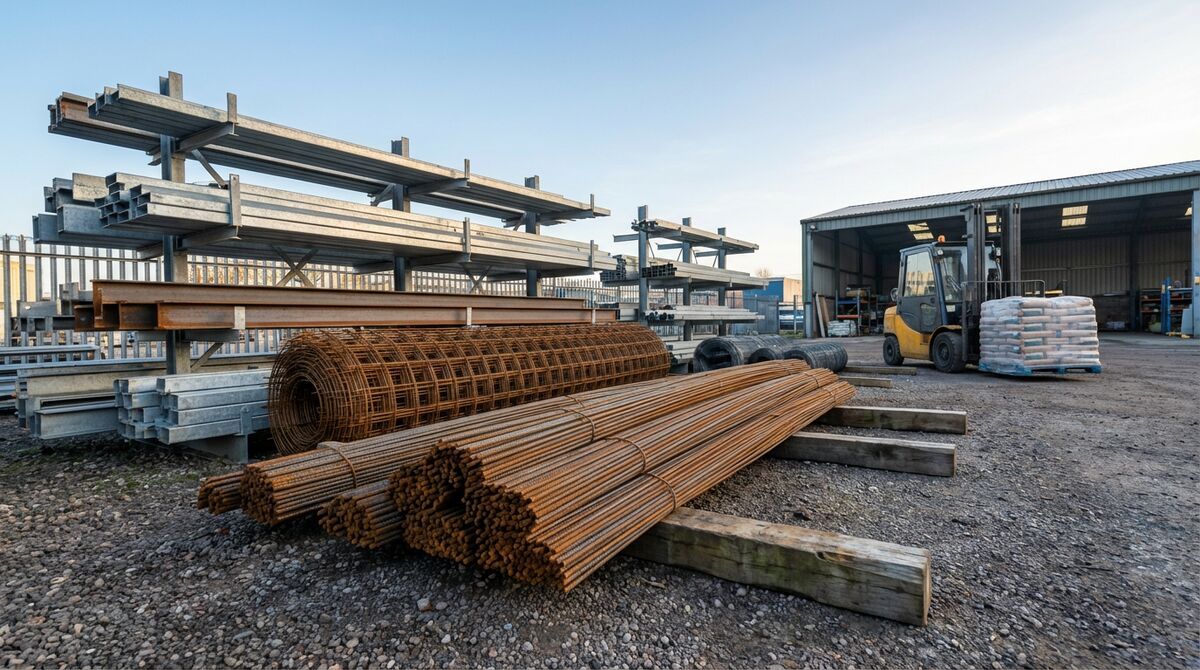
In the first week of March 2026, three UK steel stockholders sent surcharge notices to their customers. The increases ranged from 18% to 30%, effective within 14 days. If you had a tender out with fixed pricing on reinforcement bar, mesh, or structural steelwork, those numbers were already wrong before the client opened the envelope.
The trigger was the Strait of Hormuz. The US-Israel/Iran conflict that escalated in late February 2026 disrupted shipping through the strait, which handles roughly 20% of global oil and LNG traffic. Energy prices spiked. Steel producers, cement manufacturers, and chemical companies, all heavily exposed to energy costs, responded with surcharges. The construction industry absorbed the impact within weeks.
This is not the first supply chain shock in six years. Covid shut factories in 2020. The Suez Canal blockage in 2021 delayed timber and steel shipments for months. Russia’s invasion of Ukraine in 2022 sent energy and steel prices to record highs. Each time, the construction industry promised to “learn lessons” about supply chain resilience. Each time, the next shock arrived and caught tenders mid-flight.
The difference now is that construction material costs are already 37% above their 2020 baseline, according to the DBT building materials and components statistics. There is no slack in the system. A 30% steel surcharge in 2026 compounds on top of a 40% increase since 2020. The absolute cost of a tonne of rebar today would have been unthinkable five years ago.
What’s actually more expensive
Not everything moved equally. Here’s where the price pressure sits as of April 2026:
Steel reinforcement (rebar and mesh). The most directly affected by energy costs and Hormuz disruption. UK rebar prices are tracking at roughly £750-£800 per tonne delivered, compared to £520-£560 in early 2024. Stockholder surcharges are the immediate mechanism, but the underlying driver is the energy cost of electric arc furnace steelmaking, which accounts for most UK rebar production. Mesh prices follow the same trajectory.
Structural steel sections. Up 15-22% since January 2026. Fabricated steelwork prices are even higher because fabricators are passing through both material cost increases and their own energy cost rises (plasma cutting, welding, shot-blasting all consume significant energy).
Cement and concrete. Cement production is the most energy-intensive process in construction. UK cement prices increased 8-12% in Q1 2026. Ready-mix concrete prices vary regionally, but a C32/40 mix that cost £85-£90 per cubic metre in 2024 is now £100-£115 in most parts of England. Concrete block prices have followed a similar curve.
PVC pipe and fittings. PVC is a petrochemical derivative. When oil prices rise, PVC feedstock costs follow with a 6-8 week lag. Drainage pipe (the largest single PVC product in groundworks) has seen 10-15% increases since February 2026. Lead times have stretched from 3-5 days to 2-3 weeks for some diameters.
Fuel. Red diesel (gas oil) for plant is tracking at 95-105p per litre, up from 78-85p in late 2025. On a project running 20 pieces of plant for six months, that price difference adds £15,000-£25,000 to the fuel bill alone.
Aggregate and fill. Relatively stable, because UK aggregate is domestically quarried and not directly exposed to shipping disruption. Type 1 sub-base and 6F2 fill prices have increased 5-8% year-on-year, driven mainly by haulage cost increases (fuel) rather than raw material.
How to price a tender right now
Fixed-price lump-sum tenders submitted today for work starting in three months carry real risk. Materials you priced on Monday might cost 10% more by the time you order them. Here’s how we’re approaching it:
Build in explicit material cost assumptions
State your material cost assumptions in the tender submission. Not buried in the small print. On the front page of the commercial offer.
“Rebar priced at £780/tonne delivered, based on stockholder quotes dated 10 April 2026. This price is valid for 30 days from quote date. Material ordered after this period will be repriced at prevailing rates.”
This does two things. It tells the client exactly what assumptions underpin your number. And it creates a documented baseline for any future cost conversation. If the client wants fixed pricing beyond 30 days, they know they’re asking you to carry material price risk, and you can price that risk explicitly.
Shorten your quote validity period
The standard 90-day quote validity that most civils firms offer is dangerous in this market. Ninety days is long enough for a 20% price swing on steel or a 15% move on concrete. We’ve shortened our standard validity to 30 days, with a note that we’ll re-quote at current prices for submissions over 30 days old.
Some clients push back. “We need 90 days because our planning approval takes 60 days.” That’s a reasonable position. The answer is to offer a 90-day validity with a material cost adjustment clause attached, not to absorb 90 days of price risk for free.
Use fluctuation clauses
If the contract form allows it (and JCT, NEC, and most bespoke forms do), include a fluctuation clause that adjusts the contract sum for material price movements above a defined threshold.
Under NEC4, Option X1 (price adjustment for inflation) applies published index adjustments to the contract price. The index doesn’t perfectly match your actual cost exposure, but it captures the broad direction. Under JCT, fluctuation provisions achieve the same purpose.
For subcontracts where you’re working under the main contractor’s terms, push for a material cost adjustment clause at tender negotiation stage. The Tier 1 contractors have the same clauses in their head contracts with the client. They’re managing the risk upward; you should be managing it toward them.
Front-load your material orders
If you’ve won the work and the start date is confirmed, order materials early. Rebar, mesh, pipe, and concrete products can typically be called off in stages from a single order placed at contract award. You lock in the price at order date, even if delivery is phased over months. A tight take-off matters more than usual in this market: our rebar bending schedule calculator gives cutting lengths and tonnage to BS 8666:2020 so the order to the stockholder matches what the structural drawing actually needs.
This requires cash flow planning. You’re committing to material costs before you’ve received the first interim payment. But the alternative, ordering materials monthly at whatever the prevailing price happens to be, transfers all price volatility directly to your margin.
Stock common items
For standard products you use repeatedly (150mm and 225mm twinwall pipe, A393 mesh, Type 1 sub-base), holding two to four weeks of stock at your yard buffers you against short-term price spikes and lead time extensions. The storage cost is modest. The protection against a sudden 15% price jump or a three-week delivery delay on pipe is significant.
What clients and developers should know
If you’re commissioning construction work in 2026, three things matter:
Your contractor is not making these numbers up. When a groundworks contractor tells you their price increased 12% since the last estimate, that reflects real cost movements in steel, concrete, fuel, and labour. The BCIS tender price index shows tender price inflation running at 3.45% for 2026, but that’s an average across all sectors and all materials. For steel-heavy civils work, the real inflation rate is considerably higher.
Early engagement saves money. Appointing your contractor before the design is finalised allows them to make material choices based on current pricing and availability. If 150mm PVC pipe has a three-week lead time but 160mm PE pipe is available next week at a lower price, an early-appointed contractor can suggest the substitution. A contractor appointed after the spec is locked in cannot.
Rigid fixed-price contracts push risk to the wrong place. A groundworks subcontractor working on a £200,000 package with 8-10% margins cannot absorb a £25,000 material cost overrun. If you force them to carry that risk through a fixed-price contract with no fluctuation mechanism, one of three things happens: they inflate the tender price to cover the risk (you pay more), they cut corners during construction to recover margin (you get lower quality), or they go bust mid-project (you pay a lot more to get someone else to finish). None of these outcomes is in the client’s interest.
What we’re seeing on our own projects
On a highways drainage package we tendered in February 2026, the material cost element (twinwall pipe, concrete rings, gullies, mesh) represented 38% of the tender value. Between tender submission and contract award in late March, the material cost had increased by £11,000 on a £290,000 package. That’s a 3.8% increase on the total contract value in four weeks, eating into a margin that was already competitive.
We’d included a material cost assumption statement in the tender and flagged the risk at the pre-award meeting. The main contractor accepted a material cost adjustment that referenced the original stockholder quotes. Without that conversation, we’d have absorbed the increase or argued about it during the works, neither of which helps anyone deliver a project on time.
On another project, a car park surfacing scheme, we brought forward our sub-base and kerb deliveries by three weeks to lock in March pricing before announced April increases took effect. The early delivery cost £800 in additional crane and telehandler time for offloading and stacking. The material saving was £3,400. Straightforward commercial decision.
The longer view
The Hormuz disruption may ease. Ceasefire negotiations may succeed. Steel surcharges may be withdrawn. But the construction industry now operates in a world where supply chain shocks arrive every 18-24 months. The skills to manage that, explicit cost assumptions, shortened validity periods, fluctuation clauses, early material ordering, and honest conversations with clients about risk, are permanent commercial capabilities, not temporary measures.
The contractors who price work well in volatile markets are the ones who survive to price work in stable ones.
Connor Lyons is commercial director at Rospower Projects, MRICS. We deliver earthworks, groundworks, and civil engineering packages across the UK, with a focus on transparent commercial management for our clients and supply chain partners. Contact us to discuss your project.
Related articles

How civil engineering projects actually get managed: what subcontractors need to get right
A practical UK guide to managing civils programmes, procurement, variations, cost records, temporary works, and site communication.
From demolition to groundworks: agree the release point
Plan the demolition-to-groundworks handover: record residual structures, services, surveys, access, open risks, evidence and release authority.

Piling package tender: define the scope before pricing
Set out ground information, design inputs, access, platform duties, testing evidence and return details before piling tender bids are compared.